


From London to the Countryside: A Winter Travel Mood
January 9, 2026Avebury or Stonehenge - Which Should You Visit?
Key points
- Explore the key differences between Stonehenge and Avebury, two of the world’s most important prehistoric sites.
- Find out which site is best suited to your travel style, whether you prefer a structured visit or a more relaxed, self-guided experience.
- Learn about the history, scenery, facilities, and overall visitor experience at both sites.
- Discover how to visit each location easily from Bath or London, including through our expertly guided tours.
- Get helpful insights to decide if you should visit one or both during your time in the region.
Things to Do
Two of the world’s most extraordinary ancient monuments lie just a stone’s throw from Bath, and from each other, in the beautiful Wiltshire countryside.
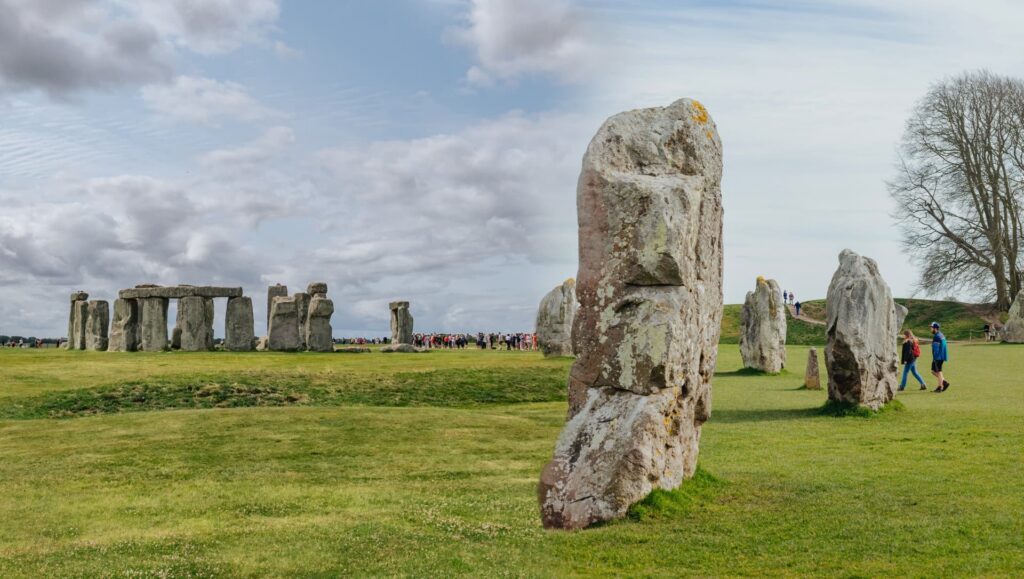
Stonehenge, a world-famous icon, is on many people’s bucket lists. But nearby Avebury, though less well known, is equally remarkable and actually much larger. In fact, it’s the biggest stone circle in the world, easily dwarfing Stonehenge in scale.
So, which should you visit?
Ideally, both!
But we know time is often short, especially on holiday. With so much to see and do, it’s not always possible to fit everything in.
That’s where we come in. Read on, and we’ll help you choose the one that’s right for you.
Things to Do in Stonehenge
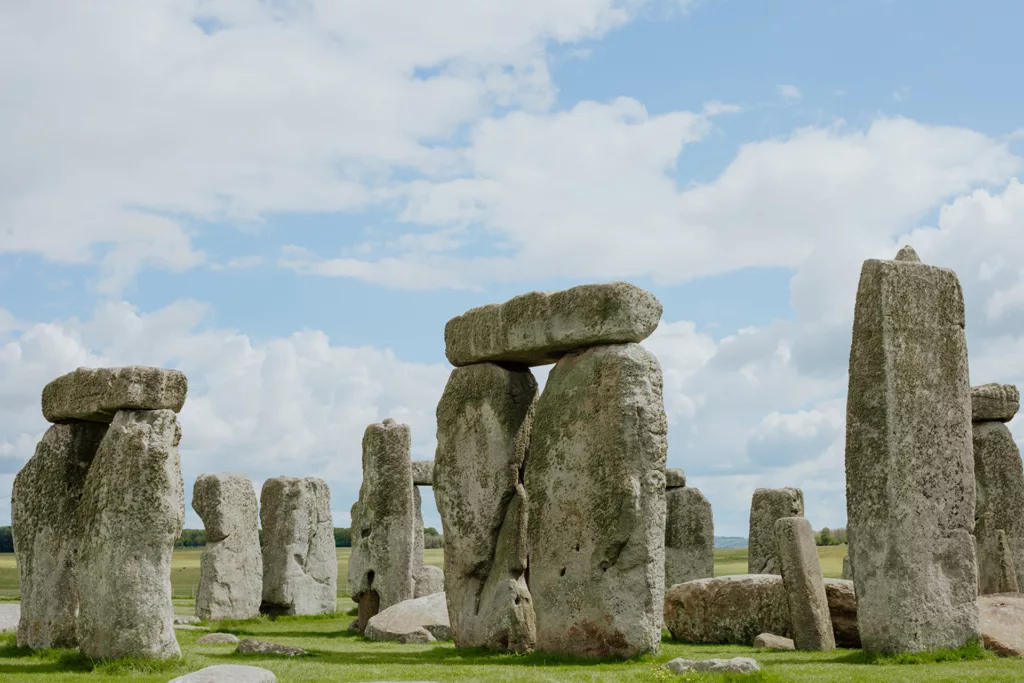
Arriving at the UNESCO World Heritage Site of Stonehenge is as awe-inspiring as it is mysterious. The striking, architect-designed Visitors’ Centre rises from the ancient landscape of Salisbury Plain, yet the stones themselves remain hidden from view.
Before heading to the monument, take a moment to enjoy the excellent café and restrooms.
Anticipation builds as you board the short shuttle bus that carries you through a landscape scattered with ancient burial mounds and other enigmatic traces left by our ancestors, leading you toward the iconic Henge.
If you've chosen to visit Stonehenge with us on our Stonehenge & Secret England tour, this is where the experience truly comes to life. Once at the stones, your In and Beyond Bath guide will help you make sense of what you’re seeing, walking you through Stonehenge’s evolution and sharing the latest research that’s uncovering the secrets of its 5,000-year history.
After the guided introduction, you’re free to wander and admire the stones from all angles, taking in the excellent interpretation boards along the way.
Before you leave, don’t miss the Interpretation Centre opposite the café. As well as displaying local archaeological finds, it features a stunning audiovisual installation that brings to life the evolution of Stonehenge over thousands of years.
Things to Do in Avebury
Avebury offers a completely different but equally mesmerising experience to Stonehenge, just without the coach parks and crowds.
It’s surrounded by other ancient monuments, just as old and mysterious, which you’ll glimpse as you approach from any direction. We won’t spoil the surprise here, but if you join our Avebury, Lacock & Ancient England tour, your In and Beyond Bath guide will take you to see them. They’re sure to leave a lasting impression — and that’s all before you’ve even reached the stones themselves.
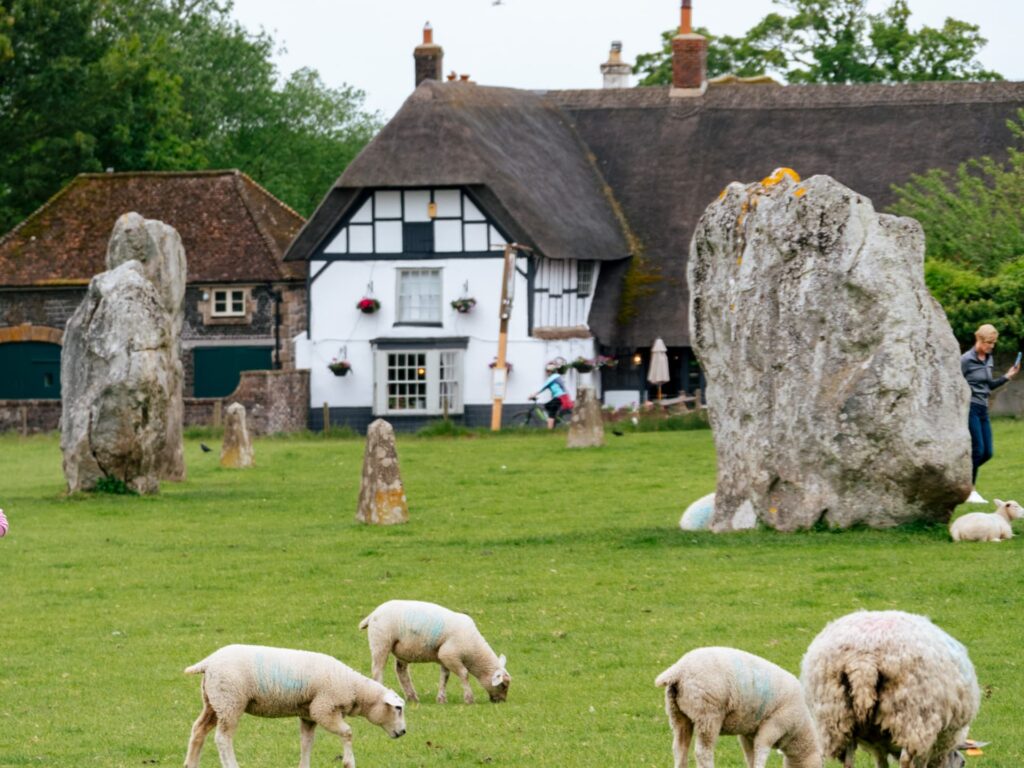
The keyword for Avebury is “low-key.” The vast banks and ditches of the Henge encircle the village, and you’re free to wander in any direction, walking the perimeter or weaving between the stones, all while dodging the occasional grazing sheep.
Unlike Stonehenge, you can get up close and personal with the stones in Avebury’s circle. Some visitors even give them a hug.
The village nestled within the circle is ancient and full of character, with thatched cottages, a traditional pub (The Red Lion), and independent shops selling souvenirs and spiritual treasures. It’s no wonder Avebury is a favourite for seekers and those drawn to the mystical.
From here, you can also walk to other nearby sacred sites, including Silbury Hill, the largest manmade mound in Europe, and West Kennet Long Barrow, a Neolithic tomb that predates both Avebury and Stonehenge. Step inside and feel the awe of walking through 5,000 years of history.
The Costs
Stonehenge receives around one and a half million visitors each year. Avebury sees about a quarter of that number, but even so, the impact of so many feet takes its toll on both sites and requires ongoing conservation work to prevent wear and tear.
At Stonehenge, the entrance fee and car parking are managed by the charity English Heritage (or "non-profit" as our American friends might say), which oversees the site and funds its upkeep.
At Avebury, the costs are slightly less upfront, with charges limited to car parking. The site is looked after by the National Trust, another major UK conservation charity, which manages it on behalf of English Heritage. Along with car park revenue, the National Trust’s five million-plus members help fund the preservation of Avebury through their annual membership fees.
How Much Does It Cost to Visit Stonehenge?
Stonehenge is one of the most visited historic sites in the UK, and while it does require a ticket, the experience is well worth it. Here’s everything you need to know about entry fees, parking, and how to make the most of your visit.
Entry Tickets and What’s Included
- Managed by: English Heritage
- Admission required: Includes access to the stone circle, visitor centre, and shuttle bus
- Audio Guide: Free app available in 13 languages
- Membership option: English Heritage members enjoy free access to Stonehenge and 400+ historic sites for a year
Top Tip: Queues at the ticket office can be long in peak season and on weekends.
With In & Beyond Bath, you skip the queues — we pre-book your tickets, and the cost is included in your tour price.
Parking
- Parking is available at the main Visitors Centre
- A small additional charge applies for private vehicles
Shuttle Bus
- The shuttle between the Visitors Centre and the stones is included in your ticket
- It’s optional — you can also walk the scenic route (approx. 25 minutes)
Getting There
Stonehenge isn’t the easiest site to reach by public transport. The closest station is Salisbury, with bus connections to the Visitors Centre.
Looking for a smoother experience?
We offer regular Stonehenge tours from Bath, with comfortable transport, friendly guides, and all logistics taken care of. We can also pick you up from:
- Bath Spa Station
- Chippenham station
- Other nearby locations, by request
You can join a shared group tour or enjoy a private experience, just for you or your group.
How Much Does It Cost to Visit Avebury?
Unlike its more famous neighbour, Avebury is surprisingly affordable to visit — in fact, for most visitors, it's almost entirely free. Here's what you need to know about costs, access, and how to make the most of your time there.
Entry Costs and What’s Free
- Stone circle and earthworks: Free to access, 24 hours a day
- Parking: Pay-and-display car park managed by the National Trust
- Additional attractions: Entry required for Avebury Manor and the museum
Did you know? The car park fees help support the ongoing care of the site by the National Trust, a UK conservation charity that looks after Avebury on behalf of English Heritage.
If you want to explore more of the site — including the beautifully preserved Avebury Manor and the museum of local archaeological finds — you’ll need a ticket. Proceeds support the Trust’s work preserving historic places and natural landscapes across the UK.
Getting There
Avebury’s peaceful, rural location is part of its charm, but it also means access isn’t as simple as it is for Stonehenge.
Public transport options are limited:
- Nearest train station: Swindon (with connections from London)
- Bus service: Hourly from nearby towns like Marlborough, Devizes, and Swindon; reduced on evenings and Sundays
Want a simpler way to explore?
Our Avebury, Lacock & Ancient England tour offers a seamless experience with comfortable private transport and expert local guides. You’ll also get to explore the village of Lacock, a must-see for film and history lovers alike.
Lacock has featured in:
- Harry Potter (as Hogwarts)
- Pride and Prejudice (1995 BBC adaptation)
- Downton Abbey, Cranford, and many more
The village is also home to an 800-year-old abbey and is the birthplace of British photography. Jane Austen fans will also recognise it as Meryton from the beloved 1995 series.
The Facilities
Both Stonehenge and Avebury are equipped to welcome visitors, offering parking, toilets, places to eat, and visitor information. However, despite Stonehenge’s larger visitor numbers, its remote setting means there are fewer options for food beyond what’s provided on-site.
At Avebury, the stone circle is woven into the heart of the village itself, where you’ll find a traditional pub, a National Trust café, and independent shops offering refreshments and souvenirs.
Facilities at Stonehenge
Stonehenge is fully geared up to accommodate its one and a half million annual visitors.
Cafe
The on-site café serves a selection of hot food, sandwiches, and both hot and cold drinks.
Gift Shop
The gift shop offers a carefully curated range of books, souvenirs, and artefacts. You’ll find everything from prehistory books and polished blue stones to Stonehenge-branded sweatshirts.
Toilets
Spacious restroom facilities are located just off the main car park. Note that parking now carries a separate fee from your entry ticket.
Shuttle Bus
A complimentary shuttle bus operates between the Visitors Centre and the stones themselves. This short journey is included in your ticket and saves time if you prefer not to make the 25-minute walk each way.
Exhibition Centre
The Exhibition Centre, located near the shuttle bus stop, is well worth your time. It offers an excellent overview of Stonehenge and the surrounding ancient landscape.
We always recommend allowing time for this during your visit with In & Beyond Bath. As well as showcasing artefacts found at Stonehenge, the exhibition features a fascinating audiovisual display that traces the monument’s story from the hunter-gatherer landscapes of 10,000 years ago through to its abandonment 3,500 years ago.
Facilities at Avebury
Avebury offers a more relaxed and low-key visitor experience, but there’s still plenty to enjoy beyond the stones.
Museum
Avebury’s museum is dedicated to the remarkable archaeological discoveries made here, offering insights into the site’s prehistoric significance.
Avebury Manor
On the edge of the stone circle sits Avebury’s 16th-century manor house, cared for by the National Trust. This beautifully preserved home was featured in the BBC series To The Manor Born. Each room reflects a different period in the manor’s history, from the Elizabethan era to the 20th century. For a fully immersive experience, visitors can even encounter the scents of each era as they explore.
The manor’s gardens are equally worth visiting and are included with your ticket to the house.
Please note: Opening times for Avebury Manor can vary. We recommend checking the latest information on the National Trust website before planning your visit.
Cafe
Next to the manor house, you’ll find a charming courtyard café. This area also features a large wooden barn used for exhibitions, a wildlife pond, and a rare circular medieval dovecot. This dovecot was originally built to house pigeons and doves, which provided eggs, meat, and feathers for the manor’s residents. Even the droppings were put to good use as fertiliser.
Shops and Amenities
The National Trust gift shop offers a thoughtful selection of souvenirs, books, and local interest items, perfect for those looking to take home a memento of their visit. Public toilets are available close to the National Trust buildings and the main visitor facilities.
Avebury Village
What sets Avebury apart is its location within a living, breathing English village. Beyond the National Trust’s facilities, visitors can explore the wider village, where thatched cottages, charming shops, and quiet lanes add to the appeal.
Highlights include:
- The Red Lion pub, one of England’s most famous and atmospheric village pubs, is reputedly haunted.
- Independent shops selling everything from souvenirs to crystals and New Age items, popular with the spiritual visitors the site often attracts.
- Avebury Parish Church (St James’s), a beautiful medieval church nestled within the village, is well worth a visit as part of your time here.
Together, these elements make Avebury not just a visit to a remarkable ancient site, but a chance to enjoy the unique charm of rural Wiltshire life.
The Scenery
Both Stonehenge and Avebury sit within the historic county of Wiltshire, just 25 miles apart. Yet despite their proximity, the landscapes they inhabit feel worlds apart. Each offers its own atmosphere and sense of wonder.

The Landscape Around Stonehenge
Stonehenge rises from Salisbury Plain, a vast, open expanse of chalk downland that has remained largely unchanged for thousands of years. This windswept plateau, with its rolling grasslands and enormous skies, creates a dramatic backdrop for the monument.
The landscape around Stonehenge is dotted with hundreds of prehistoric burial mounds and earthworks, many of which predate the stone circle itself. As you approach the stones, you're walking through one of the richest archaeological landscapes in Britain.
What makes it special:
- Dramatic, uninterrupted views across the chalk downland
- A sense of isolation and timelessness
- Ancient burial mounds visible across the landscape
- Open skies that emphasise the monument's alignment with the sun

The Landscape Around Avebury
In contrast, Avebury sits in a gentler, more intimate landscape. The Marlborough Downs surround the site with their characteristic rounded hills and patchwork of fields, woodlands, and hedgerows.
This is a landscape shaped by centuries of farming, where the ancient stones share space with grazing sheep, thatched cottages, and winding country lanes. The banks and ditches of the henge blend seamlessly into the rolling countryside, creating a sense of harmony between the ancient and the everyday.
What makes it special:
- Peaceful, pastoral scenery with a lived-in character
- Views of Silbury Hill and other prehistoric monuments
- Ancient stones integrated into fields and village streets
- A gentler, more accessible landscape for exploring on foot
Both landscapes offer something unique. Stonehenge gives you the raw, elemental power of the open plain, while Avebury offers the charm of the English countryside woven around its ancient stones.
The History
Both Stonehenge and Avebury are steeped in history. Whichever you choose to visit, you’re in for an extraordinary journey into Britain’s ancient past. Here’s a glimpse of what each site has to offer.
The History of Stonehenge
Stonehenge began life around 5,000 years ago as a simple ringed ditch and bank, used as a burial site for more than 100 people. Over the following 1,500 years, it underwent several phases of development, including at least two distinct arrangements of stones.
The Rings of Stonehenge
The first was a simple circle of bluestones, transported an astonishing 250 miles from West Wales — a feat that still fascinates archaeologists today.
The second phase introduced the iconic trilithons (from the Greek, meaning “three stones”) — the two uprights and horizontal capstones that form the recognisable silhouette we see today. These larger stones were carefully shaped and arranged to align with the sun, marking the winter and summer solstices. In this final form, Stonehenge became not just a monument but a solar calendar.
Around 3,500 years ago, after 1,500 years of use and transformation, Stonehenge was mysteriously abandoned. By that time, approximately fifty generations had contributed to its creation.
Remarkably, evidence suggests the site continued to attract visitors. Offerings and artefacts show that the Romans visited and likely marvelled at this ancient place, wondering about the people who had raised these stones. Even then, the monument was already 1,500 years old.
Stonehenge in Modern Times
In more recent centuries, attitudes were rather different. In the 19th century, it was possible to hire a hammer and chisel to take home a souvenir piece — something unthinkable today.
From the early 1800s, Stonehenge was owned by the Antrobus family, who stationed a policeman to guard the stones and refused permission for government archaeologists to survey them. Legend has it that an American millionaire once tried to buy and export the monument, but Sir Edmund Antrobus declined. Had he agreed, no law at the time could have stopped the sale.
In 1915, the Antrobus Estate was auctioned off, and a local businessman, Cecil Chubb, happened upon the sale and bought Stonehenge for £6,600 — supposedly as a surprise gift for his wife. Upon hearing the news, she reportedly said, “I’d rather have had a set of dining chairs.” As a result, Cecil generously gifted Stonehenge to the nation.
After the First World War, a significant restoration project began to stabilise the stones and undo centuries of neglect.
The History of Avebury
Like Stonehenge, Avebury was built over many generations, beginning around 4,600 years ago. The construction took around 600 years, involving countless tons of sarsen stone hauled from the nearby Marlborough Downs.
The Scale of Avebury
What makes Avebury truly remarkable is its sheer size. The outer circle originally contained around 100 massive standing stones, making it the largest stone circle in the world. Inside this outer ring were two smaller circles, creating a complex arrangement whose purpose remains a mystery.
The henge itself — the massive ditch and bank that surrounds the stones — was an enormous undertaking. The ditch was cut 9 metres deep into the chalk using only antler picks and shoulder blades of cattle as shovels. The excavated chalk was then piled up to create the outer bank, which still stands up to 4 metres high in places.
Avebury Through the Ages
Unlike Stonehenge, Avebury's stones were never shaped or aligned with astronomical events. Instead, they stand raw and irregular, each one unique in size and form. This gives the site a more primal, organic feel.
During the medieval period, the church viewed the stones with suspicion, and many were deliberately toppled and buried. Some were even broken up to build the village cottages that now sit within the circle. It wasn't until the 1930s that archaeologist Alexander Keiller began excavating and re-erecting the fallen stones, revealing the monument we see today.
What makes Avebury special:
- The largest stone circle in the world
- Stones left in their natural, unshaped form
- A lived-in landscape where ancient and modern coexist
- A sense of mystery — we still don't know its original purpose
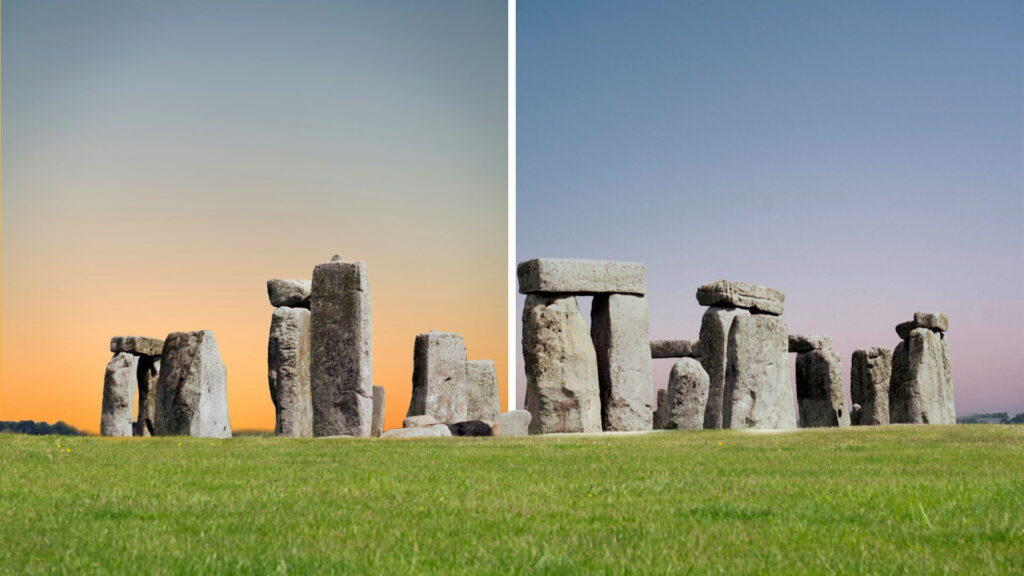
Pros and Cons of Avebury and Stonehenge
Comparing these two ancient and extraordinary places isn’t easy — both are unique, remarkable, and well worth visiting. In fact, we’d recommend seeing both if you can. However, we know time and travel plans don’t always allow for it.
So which should you choose? That really depends on the kind of experience you’re looking for. Below, we’ve broken down the pros and cons of each to help you decide. At the end, we’ll share our verdict.
Stonehenge Pros
- A world-famous landmark — ideal for ticking off the bucket list
- Makes for iconic photos and unforgettable memories
- Fully equipped for visitors, with excellent facilities
- Visitor centre with exhibitions
- Gift shop
- Café serving food and drinks
- Toilets
- Shuttle service to the stones
- A unique feat of ancient engineering, aligned with the solstices
- Rich in historical and archaeological significance
- Ideal if you prefer structured, guided experiences
Stonehenge Cons
- Extremely popular — attracts large crowds and coach groups year-round
- The stones are about a mile from the Visitors Centre, though a shuttle bus is available
- Parking charges apply
- Requires plenty of time to fully appreciate both the stones and the visitor centre
- Entry fee applies (goes towards ongoing conservation)
- You can only get close to the stones, not inside the circle (except on special access visits)
- Queues for tickets are common — we recommend booking in advance
- Can be very busy during peak times and seasons (early mornings and off-peak months are best)
- Hard to reach without a car or a tour
Avebury Pros
- Free to visit (apart from parking and optional attractions like the manor or museum)
- Open to visitors day and night — perfect for those who enjoy exploring at quieter times
- Full access to the stones — you can walk among them and even touch them, a rare opportunity at sites like this
- A wonderfully peaceful, rural setting with views across the ancient landscape.
- Surrounded by other remarkable prehistoric monuments visible from the site, such as Silbury Hill and West Kennet Long Barrow.
- Sheep often roam among the stones, and in spring, you might spot lambs too.
- No queues or crowds! A more relaxed and personal experience compared to Stonehenge.
Avebury Cons
- Less famous internationally, it may not offer the same “bucket list” appeal as Stonehenge.
- The site is more natural and less maintained; chalky paths can be muddy and slippery in wet weather.
- The stones are irregular and untouched, lacking the monumental shaping seen at Stonehenge.
- No solar alignments or clear astronomical purpose, unlike Stonehenge’s precision design.
- No large-scale visitor centre or café. While there are shops, a pub, and a small café in the village, facilities are more modest compared to Stonehenge’s purpose-built visitor infrastructure.
Summary
If Stonehenge is on your bucket list, Avebury deserves to be there too.
Both are awe-inspiring feats of prehistoric engineering, created long before the invention of the wheel or the use of horses. These monuments were shaped by many generations of our ancestors working with a shared purpose — around 600 years in the case of Avebury, and 500 years for Stonehenge.
Today, both sites continue to inspire wonder and attract visitors from around the world to this unique corner of Wiltshire.
If you need to choose between them, it really comes down to the type of traveller you are:
Choose Avebury if you...
- Enjoy exploring at your own pace
- Prefer a quieter, less crowded experience
- Want to wander through a charming thatched English village with shops, a pub, and a medieval church
- Like the freedom to touch and walk among the ancient stones
- Enjoy longer, more open-ended walks with other prehistoric sites nearby
- Are interested in spiritual connections, folklore, and less commercialised experiences
Choose Stonehenge if you...
- Prefer a structured, well-organised visitor experience with clear interpretation
- Want to tick off a world-famous, iconic landmark
- Appreciate clear facilities like a café, toilets, a shuttle bus, and exhibitions
- Are keen to learn about the latest archaeological findings
- Would benefit from an easier, more accessible route with minimal walking if desired
Choose either if you...
- Enjoy photography and capturing incredible landscapes and ancient monuments
- Want to experience world-class history in the heart of Wiltshire

How to Visit Both Sites with In & Beyond Bath
Ultimately, both offer a fantastic day out, rich with history and discovery.
If you're looking for a full-day experience, our Signature Tours offer the perfect balance of iconic highlights and hidden gems.
Choose from:
- Stonehenge & Secret England — Combines Stonehenge with the enchanting village of Castle Combe and stunning countryside
- Avebury, Lacock & Ancient England — Explores Avebury alongside the beautiful village of Lacock and other ancient sites
Both tours go beyond the obvious to reveal other incredible aspects of rural England alongside these world-class monuments.
For those short on time, our Stonehenge Unearthed half-day morning tour is an ideal choice. It's one of our most popular tours, giving you a chance to experience this world-famous site with ease and insight.
If you're keen to visit both Avebury and Stonehenge in a single day, or would like something more bespoke, our custom tours can be tailored entirely around your interests. Whether it's history, landscapes, or combining these sites with other special locations, we can craft the perfect day for you.
P.S. While we operate from Bath, we also offer itineraries for visitors staying in London. Our Tours from London (via Train) make it easy to join us. Simply take the train from Paddington Station to Chippenham (ideal for Avebury) or Bath Spa (perfect for Stonehenge). We'll meet you at the platform and take care of the rest.
ABOUT THE AUTHOR
Simon Whittaker
Ex-history teacher & tour guide, he has both academic insight as well as on-ground expertise.